
Walk through the streets of Paris, and something feels… different. The buildings aren’t just structures. They tell a story. Soft colors, detailed balconies, perfect symmetry — everything feels carefully designed. And here’s the interesting part: this same design style is now inspiring modern websites.
Paris France architecture has influenced design for centuries. From tall Gothic cathedrals to elegant Haussmannian buildings, from artistic Art Nouveau details to clean modern structures — each style brings its own look and feeling.
In this guide, you’ll explore the different architectural styles of Paris, understand the colors that make them stand out, and see how these ideas connect to modern website design. By the end, you’ll not only understand Paris architecture better — you’ll also see how to use its ideas in real-world design.
What Makes Paris France Architecture Unique?
Paris France architecture is known for its elegant, balanced, and timeless design. The buildings are not just made to function — they are designed to look beautiful together. That’s what makes Paris different from many other cities.
What really sets it apart is how everything feels connected. Streets, buildings, colors, and even small details follow a clear pattern. You don’t see random styles clashing. Instead, the city feels smooth, calm, and well-planned.
Another reason Paris stands out globally is its perfect mix of old and new. You’ll find centuries-old cathedrals standing near modern glass structures — and somehow, they still look good together.
Read more: Architecture of Mayan Civilization: Pyramids, Design, and Hidden Innovations
Key Characteristics
Parisian architecture follows a few simple but powerful design rules:
- Symmetry and balance
Buildings are evenly designed. Windows, doors, and floors line up perfectly, creating a clean and pleasing look. - Soft color palettes
Most buildings use light tones like cream, beige, and soft grey. These colors reflect sunlight and give the city a warm, calm feeling. - Decorative details
Look closely, and you’ll notice iron balconies, carved stone, and artistic patterns. These small details add elegance without making the design feel heavy. - Strong street alignment (Haussmann planning)
Buildings are arranged in straight lines along wide streets. This creates a sense of order and makes the city easy to navigate — both visually and physically.
A Quick History of Paris Architecture
Paris didn’t become beautiful overnight. Its architecture has evolved over hundreds of years — each period adding something new. Let’s break it down in a simple way.
Medieval & Gothic Period
This is where it all began.
During this time, Paris focused on churches and cathedrals. These buildings were designed to feel powerful and spiritual.
- Tall, vertical structures that reach toward the sky
- Stained glass windows that fill interiors with colorful light
- Heavy stone construction
The goal was simple: make people feel small and connected to something bigger.
Renaissance & Classical Influence
Later, design became more balanced and organized.
Instead of tall and dramatic, buildings started to focus on symmetry and proportion.
- Straight lines and even spacing
- Clean, structured facades
- Inspired by ancient Greek and Roman design
This period introduced the idea that beauty comes from balance — a concept still used today.
Haussmannian Transformation (Most Important)
This is the moment that truly shaped modern Paris.
In the 19th century, Paris was redesigned under Baron Haussmann. The goal was to make the city more open, organized, and modern.
- Wide boulevards replaced narrow streets
- Uniform buildings created a consistent look
- Neutral tones like cream and beige became standard
This is why today, Paris feels so clean and visually connected. Almost every building follows the same structure and height — and that’s what makes it iconic.
Modern & Contemporary Paris
Today, Paris mixes old with new.
You’ll still see historic buildings, but now they stand next to glass and steel structures.
- Minimalist designs
- Bold contrasts (old vs modern)
- Use of technology and new materials
Areas like La Défense show how Paris continues to evolve — without losing its identity.
Famous Architectural Styles in Paris
Paris is not built in just one style. It’s a mix of different architectural ideas, each with its own personality. Let’s explore the most important ones in a simple way.
Gothic Architecture in Paris
This is one of the oldest and most dramatic styles in Paris.
Features:
- Tall, pointed arches
- Large stained glass windows
- Detailed stone carvings
- Strong vertical design
Example buildings:
- Notre-Dame Cathedral
- Sainte-Chapelle
Haussmannian Architecture Paris
This is the most recognizable style of Paris — the one you see in almost every street view.
What makes it special:
- Uniform building height
- Long rows of matching facades
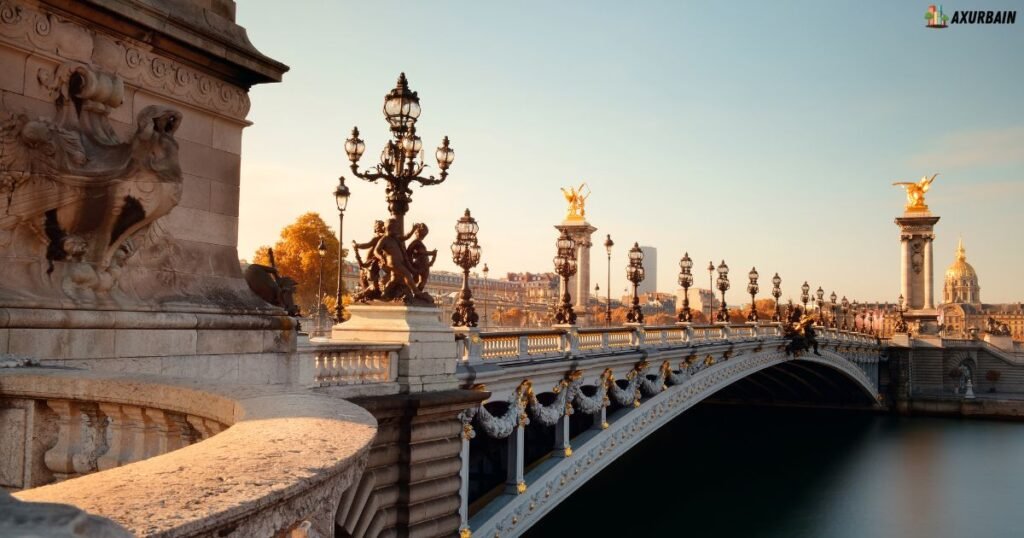
- Classic Paris balconies
Colors + structure:
- Soft tones like cream, beige, and light grey
- Stone facades with subtle details
- Symmetrical windows and floors
This style gives Paris its clean, elegant, and organized look.
Art Nouveau in Paris
Art Nouveau adds a creative and artistic touch to the city.
Key elements:
- Flowing, curved lines
- Designs inspired by nature (flowers, plants)
- Decorative and unique structures
Unique entrances:
You’ll often see this style in Paris Metro entrances, with curved iron designs that look almost like plants growing from the ground.
Modern Architecture in Paris
Modern Paris brings a fresh and bold contrast.
Main ideas:
- Simple, clean designs (minimalism)
- Use of glass, steel, and concrete
- Focus on function over decoration
Glass + geometric shapes:
Modern buildings often use sharp lines, large glass panels, and unique shapes. They stand out — especially next to older buildings — but still fit into the city’s overall design.
Iconic Buildings That Define Paris Architecture
Paris is full of beautiful buildings, but a few stand out more than others. These landmarks don’t just look good — they define what Paris architecture really is.
Eiffel Tower
- Structure + color (iron tone):
Made entirely of iron, the Eiffel Tower has a warm brown tone that changes slightly with light. Its open, lattice structure feels both strong and lightweight. - Modern inspiration:
When it was built, it was considered bold and different. Today, it inspires modern design with its minimal structure, exposed materials, and clean form — something you also see in modern websites.
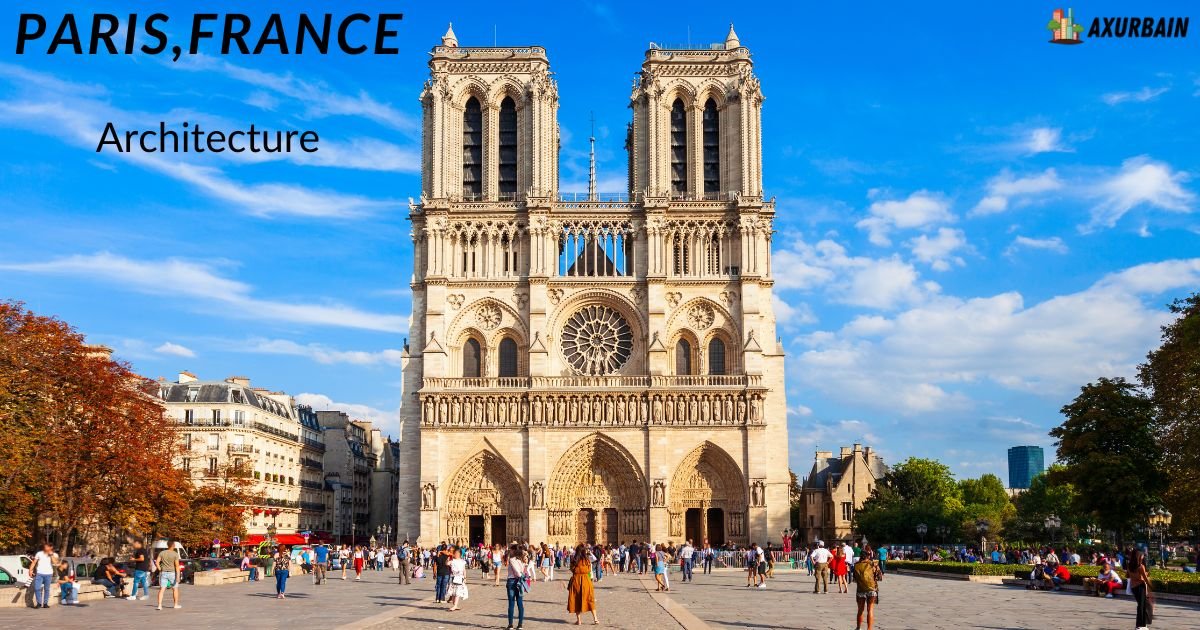
Notre-Dame Cathedral
- Gothic elements:
Pointed arches, detailed carvings, and tall towers make this one of the best examples of Gothic architecture in Paris. - Light + color through glass:
The stained glass windows create a magical effect inside. Light passes through colored glass, filling the space with soft, vibrant colors — a perfect mix of design and emotion.
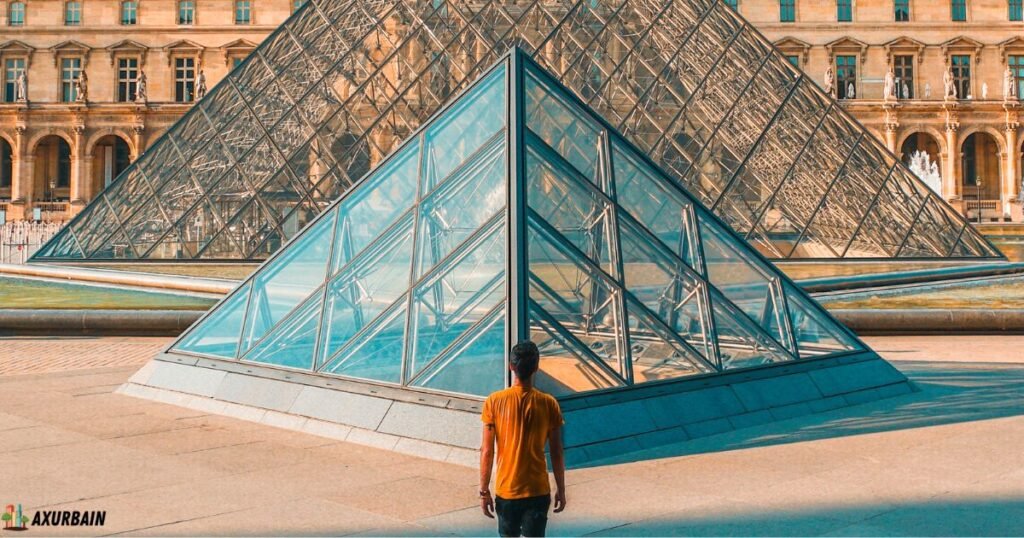
Louvre Pyramid
- Glass + contrast with classic:
This is where old meets new. The modern glass pyramid stands right in front of a historic palace. The contrast works beautifully because of its simple shape and transparency.
Sacré-Cœur Basilica
- White stone + soft tones:
This building stands out because of its bright white color. The stone reflects sunlight, making it glow, especially during sunset.
Its soft tones and rounded shape give it a peaceful and calm feeling, very different from the dramatic Gothic style.
Color Psychology in Paris France Architecture
Colors in Paris are not random. Every shade you see — from soft beige walls to black balconies — is carefully chosen. These colors don’t just look nice. They affect how people feel.
Let’s break it down simply.
Why Paris Uses Soft, Neutral Colors
Most buildings in Paris use colors like:
- Cream
- Beige
- Light grey
These shades are calm and easy on the eyes. But there’s also a smart reason behind them.
They reflect sunlight.
Instead of absorbing heat, these colors bounce light back, making the city feel brighter and more open. This creates a warm, welcoming atmosphere — even on cloudy days.
That’s why walking in Paris feels soft and relaxing, not harsh or overwhelming.
Role of Natural Light
Paris architecture is designed to work with light, not against it.
- Buildings are positioned to catch sunlight
- Light reflects off soft-colored walls
- Streets feel naturally bright without strong artificial lighting
Accent Colors in Details
While the main colors are soft, Paris adds contrast through small details.
- Black iron balconies → add sharp contrast and structure
- Gold highlights → give a touch of luxury
- Green doors and windows → bring a natural, fresh feel
These accents stop the design from feeling boring. Instead, they add depth and personality without overwhelming the overall look.
Read more: How Italian Architecture Differs From American Architecture: A Complete Guide
How Paris Architecture Matches “Browser Colors” in Modern Websites
Here’s where things get really interesting.
Paris isn’t just inspiring buildings — it’s quietly shaping how modern websites look and feel. The same design ideas you see on Paris streets are now used in digital spaces.
Let’s connect the dots.
What Are Browser Colors in Web Design?
In simple words, browser colors are the colors you see when you open a website.
This includes:
- Background colors → the main canvas of the site
- UI themes → light or dark styles that set the mood
- Website color schemes → the full combination of colors used across pages
These colors are not just for looks. They affect how users feel, read, and interact with a website.
Similarities Between Paris Buildings and Website Design
Now compare a Paris street with a modern website — you’ll notice surprising similarities.
- Neutral backgrounds (like Haussmann buildings)
Just like Paris buildings use beige and cream, websites use soft backgrounds like white or light grey. This keeps things clean and easy to read. - Clean layouts (grid structure like Paris streets)
Paris streets are straight and organized. Websites follow the same idea using grids — everything is aligned, structured, and easy to navigate. - Highlight elements (buttons = balconies/details)
Small details in Paris (like balconies) stand out against soft walls. On websites, buttons and links do the same job — they grab attention without overwhelming the design.
Minimalism Inspired by Paris
One of the biggest lessons from Paris architecture is: less is more.
- No unnecessary clutter
- Focus on what matters
- Clean, open space
Frequently Asked Questions.
What is Paris, France architecture known for?
Paris France architecture is known for its symmetry, soft colors, decorative balconies, and uniform building design, especially seen in Haussmann-style streets.
What colors are used in Paris architecture?
Common colors include cream, beige, light grey, and soft white, with accents like black iron, gold details, and green shutters.
What is Haussmannian architecture?
Haussmannian architecture is a Paris style with uniform buildings, wide streets, balconies, and neutral-colored facades, created during the 19th century redesign of Paris.
How does Paris architecture influence modern web design?
It inspires clean layouts, neutral color schemes, and minimal design, making websites look elegant and easy to use.
Why are Paris buildings mostly beige or white?
Because these colors reflect sunlight, keep buildings bright, and create a warm, calm visual feel across the city.
Conclusion
Paris France architecture is more than just beautiful buildings. It’s a perfect mix of history, balance, soft colors, and smart design. From Gothic cathedrals to Haussmannian streets and modern glass structures, every style adds something unique to the city.
What makes it truly special is how these ideas go beyond architecture. The same principles — clean layouts, neutral colors, and elegant details — are now shaping modern website design.
The takeaway is simple:
Good design is timeless.If you’re building a website or working on any design, you can learn a lot from Paris. Keep it clean, use soft colors, focus on structure, and add small details that stand out.