Norse Architecture is the traditional building style of the Vikings and early Scandinavian societies, known for its practical design and use of natural materials. It developed between 800 and 1300 AD, during the Viking Age and early medieval period, in regions like Norway, Sweden, and Denmark.
These structures were built to survive cold climates, strong winds, and long winters. The most common examples include Viking longhouses, which were large shared homes, and stave churches, famous for their wooden construction and detailed carvings.
Norse builders mainly used materials like timber, turf, and stone, creating strong, insulated buildings that were simple, functional, and closely connected to nature.
What Is Norse Architecture?
Norse architecture is the traditional building style of the Vikings, focused on simple, strong structures made from natural materials like wood and turf.
It developed during the Viking Age (800–1300 AD) in Scandinavia, including modern-day Norway, Sweden, and Denmark, where people built homes and structures suited to harsh northern environments.
Why It Developed This Way
Norse architecture wasn’t just about style—it was about survival.
Climate (Cold, Snow, Wind)
Scandinavia has long, freezing winters with heavy snowfall and strong winds. Buildings needed thick walls and sloped roofs to handle these conditions.
Resource Availability (Wood, Turf, Stone)
People used what they had around them. Forests provided timber, while turf and stone helped with insulation and strength.
Survival-Focused Design
Every design choice had a purpose—keeping heat inside, protecting from weather, and making daily life easier in a tough environment.
Read more:What Is Edwardian Architecture? A Complete Guide to Its Style, Features & Homes
Key Features of Norse Architecture
Norse architecture may look simple at first, but every feature had a purpose. These buildings were designed to handle cold weather, limited resources, and daily survival.
Here are the key features:
- Long, Rectangular Structures
Most Norse buildings, especially longhouses, were stretched out in a rectangular shape. This made it easier to fit large families and share heat efficiently. - Turf-Covered Roofs
Roofs were layered with grass and soil (turf). This acted like natural insulation, keeping the inside warm during freezing winters. - Thick Insulated Walls
Walls were built using wood and packed with turf or other materials. This helped trap heat inside and block cold winds. - Central Hearth
A fire was placed in the center of the building. It was used for cooking, heating, and even light, making it the heart of the home. - Minimal Windows
Windows were very small or sometimes not used at all. This reduced heat loss and kept the interior warmer. - Wooden Structural Frames
Strong wooden beams formed the skeleton of the building. Timber was widely available, making it the main construction material.
Norse Building Materials
Norse building materials were chosen based on what was easily available in nature. Vikings didn’t import fancy resources—they used what they had, and they used it smartly.
Timber (Primary Material)
Wood was the most important material in Norse construction.
- Forests in Scandinavia provided plenty of timber
- Used for frames, walls, and roofs
- Strong and flexible, making it ideal for long-lasting structures
Timber formed the backbone of almost every Norse building.
Turf and Sod
Turf (layers of grass and soil) played a huge role in insulation.
- Used on roofs and sometimes walls
- Helped trap heat inside during cold winters
- Made buildings more energy-efficient without modern tools
It was simple—but very effective.
Stone
Stone was not the main material, but it was still important.
- Used for building strong foundations
- Added support to wooden structures
- Helped protect against moisture from the ground
This made buildings more stable and durable.
Iron and Tools
Iron was used in smaller amounts, but it made a big difference.
- Used for nails, fasteners, and reinforcements
- Helped hold wooden parts together securely
- Improved the overall strength of structures
Viking Longhouses Design
Viking longhouses were the most important part of Norse architecture. They were not just homes—they were where daily life happened.
Read more:Paris France Architecture: Iconic Styles, Colors & Design Guide
What Is a Longhouse?
A longhouse was a large, rectangular wooden building used by Viking families.
- Usually 20–30 meters long
- Built using timber frames and turf insulation
- Designed to house both people and animals
These structures were built to last and handle tough weather conditions.
Layout and Interior
Inside a longhouse, everything was arranged for comfort and survival.
- Central Fire
A fire burned in the middle, providing heat, light, and a place to cook. - Shared Living Space
Families lived together in one open area, with wooden benches used for sitting and sleeping. - Animal Shelter Inside
During winter, animals were kept inside to protect them and add extra warmth to the space.
It was simple, but very efficient.
Why Longhouses Were Important
Longhouses were the heart of Viking life.
- Social + Family Hub
Families ate, slept, worked, and gathered in the same space. - Survival in Harsh Winters
The design helped keep heat inside, making it easier to survive freezing temperatures
Stave Churches in Norway
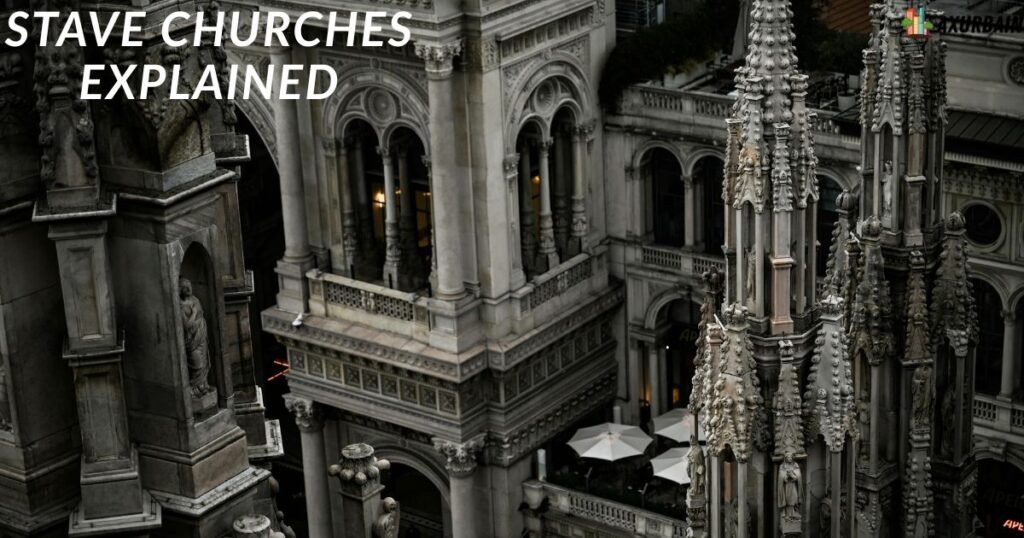
Stave churches are one of the most unique parts of Norse architecture. These wooden churches show how Viking-era building skills evolved into more detailed and artistic designs.
What Are Stave Churches?
Stave churches are medieval wooden churches built in Norway.
- Made using post-and-beam construction
- Built with vertical wooden posts called staves
- Designed to be strong, flexible, and long-lasting
They combine practical building techniques with religious purpose.
Unique Design Features
Stave churches are known for their striking and detailed design.
- Vertical Wooden Staves
These upright posts form the main structure and give the church its name. - Layered Roofs
Multiple roof levels create a tall, dramatic look and help with rain and snow runoff. - Carved Details (Dragons, Patterns)
Wooden carvings often include dragon heads and intricate patterns, showing a mix of Viking and Christian influences.
Famous Example: Borgund Stave Church
The Borgund Stave Church is one of the best-preserved stave churches in Norway.
- Built around the 12th century
- Known for its dark wood, layered roofs, and dragon-head carvings
- Still standing today, showing how durable Norse building methods were
Other Norse Structures
Norse architecture wasn’t limited to homes and churches. Vikings also built other types of structures for leadership, religion, and defense. These buildings show how organized and practical their society.
Viking Halls
Viking halls were large buildings used by chiefs and leaders.
- Served as gathering places for meetings, feasts, and decisions
- Often bigger and more decorated than regular homes
- Symbol of power and status in the community
These halls were where important social and political life happened.
Temples
Hofs were religious buildings used for Norse worship.
- Dedicated to gods like Odin and Thor
- Used for rituals, offerings, and ceremonies
- Built with wood, similar to longhouses but more symbolic in design
Fortifications
Vikings also built structures for protection and defense.
- Included earthworks, wooden walls, and fenced enclosures
- Designed to protect settlements from attacks
- Sometimes built in circular or strategic layouts
Norse Architecture vs Other Styles
Norse architecture was very different from other building styles in Europe. While others focused on beauty or defense, Norse design focused on survival and practicality.
Norse vs Roman Architecture
- Materials
Romans used stone, brick, and concrete. Norse builders mainly used wood and turf. - Design Style
Roman buildings were symmetrical and decorative. Norse buildings were simple and functional. - Purpose
Romans built cities, public life, and beauty. Norse people built for shelter and harsh weather.
Famous Examples of Norse Architecture
Here are some well-known examples that show how Norse architecture looked in real life:
Borgund Stave Church (Norway)
One of the best-preserved wooden churches from medieval Norway.
- Built in the 12th century
- Known for layered roofs and dragon-head carvings
- Shows advanced wooden construction techniques
Reconstructed Viking Longhouses (Iceland & Norway)
Modern reconstructions help us understand how Vikings lived.
- Built using traditional materials like wood and turf
- Show real-life layout and daily living conditions
- Often used in museums and historical sites
Trelleborg Ring Fort
A famous Viking-era fortress found in Denmark.
- Built in a perfect circular design
- Used for military defense and organization
- Shows planning and engineering skills of the Vikings
Influence on Modern Scandinavian Design
Norse architecture still influences how homes are designed today—especially in Scandinavian countries.
Minimalism
Modern Nordic homes focus on simplicity.
- Clean lines
- Less clutter
- Functional spaces
This comes from the Norse idea of building only what is needed.
Sustainability
Norse builders used natural, local materials—and that idea continues today.
- Eco-friendly construction
- Energy-efficient homes
- Use of renewable resources
Wood-Based Construction
Wood is still a major material in Scandinavian homes.
- Strong, natural, and warm
- Creates a cozy living environment
- Direct link to Viking-era building methods
Nature-Focused Living
Norse architecture was always connected to nature—and modern design follows the same idea.
- Large windows for natural light
- Homes built around landscapes
- Indoor-outdoor connection
Frequently Asked Questions
What is Norse architecture known for?
Norse architecture is known for simple, strong buildings made from wood and turf, designed to survive cold climates.
What materials did Vikings use?
Vikings mainly used timber, turf, and stone, along with iron for tools and reinforcements.
What is a Viking longhouse?
A Viking longhouse is a large, rectangular home where families lived together, often sharing space with animals.
Are stave churches still standing today?
Yes, several stave churches still exist in Norway, and some are over 800 years old.
Why did Norse buildings use turf?
Turf was used for insulation, helping keep buildings warm during harsh winters.
Conclusion
Norse architecture is more than just a style—it’s a reflection of how people lived, survived, and adapted to their environment. Built during the Viking Age, these structures were designed with purpose, using simple materials like wood, turf, and stone to create homes that could handle extreme weather conditions.
What makes Norse architecture stand out is its practicality. Every element, from thick walls to central fires, was designed to make daily life easier and more comfortable. There was no extra decoration or waste—just smart, functional design that worked.
It was also deeply connected to nature. Builders used local resources and designed structures that blended into the environment. The focus on simplicity, functionality, and natural materials continues to inspire homes around the world, proving that this ancient style is truly timeless.