
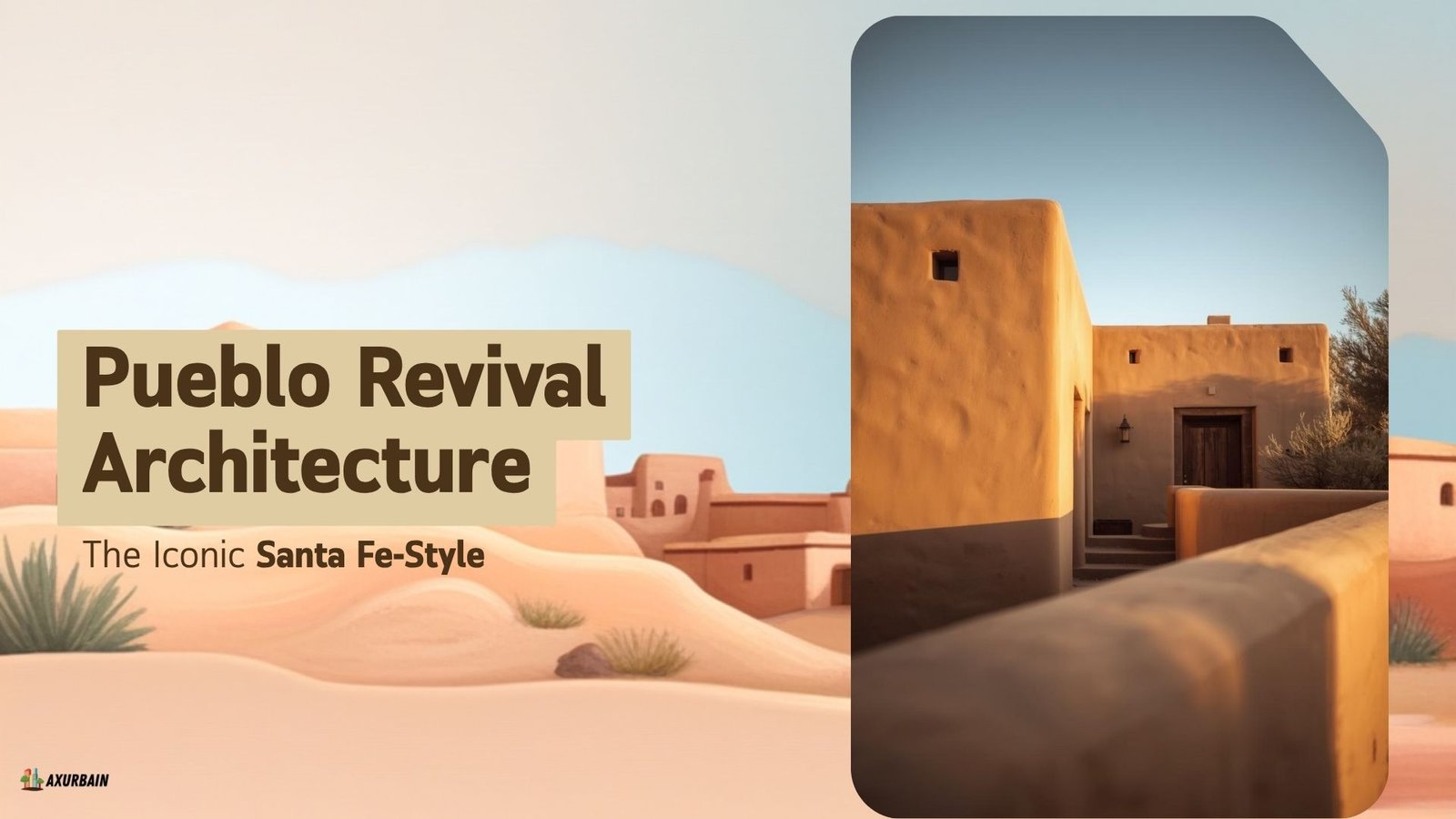
Pueblo Revival architecture is a style inspired by the traditional adobe homes of Pueblo communities, mixed with Spanish Colonial design. It is best known as the classic “Santa Fe style” you see across the American Southwest.
From my experience in urban planning, this style is not just about looks. It shows how cities can protect their identity through design. Santa Fe is a great example. The city actively encourages this style so that new buildings still feel connected to its past.
What makes Pueblo Revival architecture special is how it blends history with modern living. You still see thick walls, flat roofs, and wooden beams. But today, these homes use updated materials and construction methods. The result is a style that feels warm, natural, and perfectly suited to desert climates.
What Is Pueblo Revival Architecture?
Pueblo Revival architecture is a modern design style that copies the look and feel of traditional Pueblo buildings while using today’s construction methods.
It started as a way to bring back the visual identity of Indigenous Pueblo settlements. These original buildings were made from adobe and built in layers with shared walls and flat roofs. The revival style keeps that same appearance but adapts it for modern homes, hotels, and public buildings.
One important thing to understand is this. Pueblo Revival is not the same as original Pueblo architecture. It is a revival style, which means it is inspired by history but built for modern life. Homes today include plumbing, larger interiors, and standard layouts, even though they look traditional from the outside.
From an architectural point of view, this style is a great example of how design can carry cultural meaning. It respects the past while still meeting today’s needs.
Read More: Paris France Architecture: Iconic Styles, Colors & Design Guide
Origins and History of Pueblo Revival Style
Pueblo Revival architecture began in the early 20th century as a way to preserve regional identity in the American Southwest.
The roots go back much further. Indigenous Pueblo communities in places like New Mexico and Arizona built multi-story adobe homes for centuries. These structures were designed for climate and community living. Later, Spanish settlers introduced new elements like courtyards and wooden details.
By the early 1900s, architects and planners started to combine these influences into a clear style. They wanted cities to have a strong and unique identity instead of copying European designs.
From an urban planning perspective, this is where things get interesting. Santa Fe made a bold move. The city began promoting what became known as the “Santa Fe style.” Over time, rules were introduced to guide how buildings should look, especially in historic areas.
By the mid-20th century, this approach became official policy. New buildings in central areas had to follow design guidelines that matched Pueblo Revival, Spanish, or Territorial styles. This helped create a consistent look across the city.
Key Features of Pueblo Revival Architecture
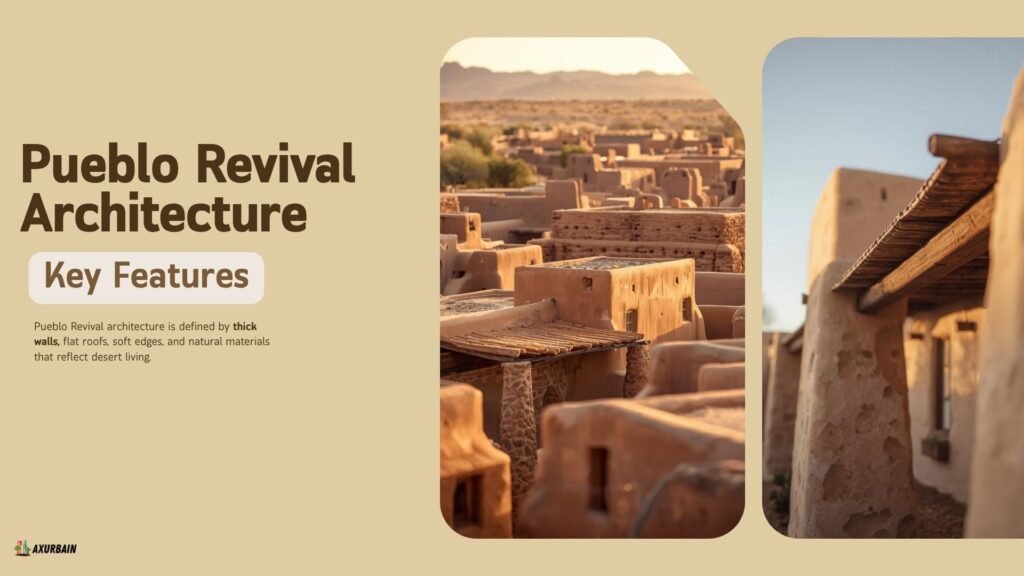
Pueblo Revival architecture is defined by thick walls, flat roofs, soft edges, and natural materials that reflect desert living.
Each feature is not just decorative. It has a purpose linked to climate, culture, and comfort.
Thick Adobe-Style Walls
These buildings use thick walls that help keep interiors cool in the day and warm at night.
Traditionally, adobe was used. Today, most homes use brick or concrete covered with stucco. The finish is often slightly uneven to mimic the handmade look of original Pueblo structures.
From a design perspective, this thickness adds both insulation and visual depth.
Flat Roofs and Parapets
Flat roofs with parapet edges are one of the most recognizable features of this style.
Instead of sloped roofs, Pueblo Revival homes use flat surfaces with short walls around the edge. You may also see canales, which are simple water spouts that drain rainwater away.
This design comes directly from traditional Pueblo villages.
Rounded Corners and Soft Edges
Unlike modern boxy homes, Pueblo Revival buildings have soft, rounded edges.
Corners are often curved instead of sharp. Walls feel smooth and organic. This creates a calm and natural look that blends into the landscape.
This feature also reflects the way adobe was shaped by hand.
Wooden Elements (Vigas and Latillas)
Exposed wooden beams, called vigas, are a key visual element in Pueblo Revival design.
These beams often stick out from the walls and support the roof. Smaller sticks called latillas are placed across them.
Even when they are decorative, they add warmth and texture to the building.
Deep-Set Windows and Doors
Windows and doors are usually set deep into the walls, creating shade and reducing heat.
Openings are often small and simple. Doors are usually made of wood and can feel heavy and solid.
This design helps control sunlight and keeps interiors cooler.
Courtyards, Patios, and Outdoor Spaces
Outdoor living spaces are a big part of Pueblo Revival architecture.
Homes often include shaded patios, inner courtyards, or porch areas. These spaces are designed for comfort in warm climates and encourage social living.
From an urban living perspective, this shows how architecture can extend beyond walls and into daily life.
Read More: Different Home Styles Explained: Victorian, Federal, Georgian & Edwardian Architecture
Materials and Colors Used in Pueblo Revival Homes
Pueblo Revival homes use natural materials and earth-tone colors to blend with the surrounding landscape.
Originally, buildings were made from adobe. This is a mix of mud, straw, sand, and water. It was shaped into bricks and dried in the sun.
Today, most homes use modern materials like:
- Concrete blocks
- Brick
- Wood framing
These are then covered with stucco to create the same look.
Color is just as important as material. You will often see:
- Light tan
- Sandy beige
- Soft brown
- Terracotta shades
- Pale pink tones
These colors are not random. They reflect the desert environment and help buildings feel connected to nature.
From my experience studying urban environments, this kind of color consistency helps create a strong visual identity across entire neighborhoods.
Where Is Pueblo Revival Architecture Found Today?
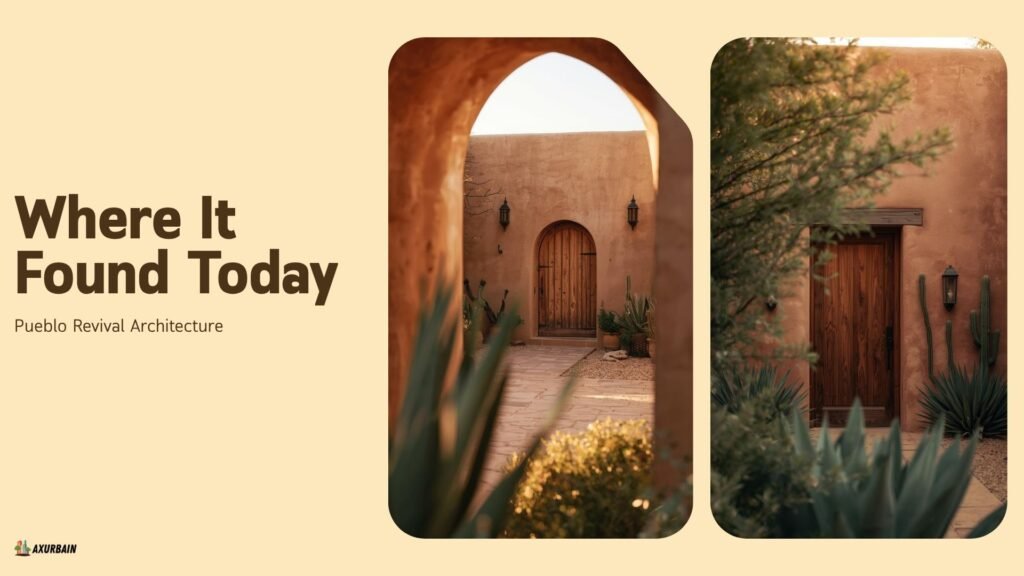
Pueblo Revival architecture is most common in the American Southwest, especially in cities like Santa Fe and Albuquerque.
These cities have made this style part of their identity. In some areas, new buildings must follow design guidelines that match the traditional look.
Residential Homes
Many single-family homes use Pueblo Revival design for its warmth and simplicity.
You will see this style in suburban areas and custom-built homes. It creates a relaxed and timeless feel.
Hotels and Hospitality Spaces
Hotels often use this style to create an authentic Southwestern experience.
Famous buildings like La Fonda in Santa Fe show how this design can feel both historic and luxurious.
Public and Commercial Buildings
Airports, museums, and civic buildings also use Pueblo Revival design.
These spaces often combine traditional forms with modern scale and function.
From an urban planning view, this is where architecture becomes part of branding. It shapes how people experience a city.
Read More: How Italian Architecture Differs From American Architecture: A Complete Guide
Pueblo Revival vs Traditional Pueblo Architecture
Pueblo Revival architecture is inspired by traditional Pueblo buildings, but it is built using modern materials and designed for today’s lifestyles.
This is one of the most common areas of confusion, so let’s break it down clearly:
| Feature | Traditional Pueblo Architecture | Pueblo Revival Architecture |
| Origin | Indigenous Pueblo communities | Early 20th-century revival movement |
| Materials | Adobe (mud, straw, water) | Stucco over brick or concrete |
| Structure | Multi-story, shared spaces | Individual homes and buildings |
| Purpose | Community living | Modern residential and commercial use |
| Design | Functional and climate-based | Functional + aesthetic inspiration |
The key idea is simple. Traditional Pueblo architecture is original and cultural. Pueblo Revival is a reinterpretation of that style.
From a design standpoint, this shows how architecture evolves. It respects history but adapts to modern needs like plumbing, privacy, and new construction methods.
Why Pueblo Revival Architecture Still Matters Today?
Pueblo Revival architecture remains relevant because it combines climate-smart design with strong cultural identity.
This is not just an old style that survived. It continues to work in modern cities for real reasons.
Climate-Responsive Design
Thick walls and small windows help control indoor temperatures naturally. This reduces the need for heavy cooling systems, especially in hot, dry regions.
Strong Sense of Place
This style gives cities a unique and recognizable identity. Santa Fe is a perfect example. The consistent use of Pueblo Revival design makes the entire city feel connected.
From my experience in urban planning, few cities manage this level of visual consistency.
Sustainability Potential
Using natural materials and passive cooling makes this style environmentally friendly. Even modern versions can follow these principles to reduce energy use.
Timeless Design Appeal
Soft forms, natural colors, and simple shapes never go out of style. This is why Pueblo Revival homes still feel modern even after decades.
Common Mistakes and Misconceptions
Many people misunderstand Pueblo Revival architecture by focusing only on its appearance instead of its purpose.
Here are some common mistakes:
❌ “It’s just adobe”
Not all Pueblo Revival buildings use real adobe. Most modern structures use stucco over other materials.
❌ “It’s only decorative”
Every feature has a function, especially for climate control. Flat roofs, thick walls, and small windows all serve a purpose.
❌ “Any stucco house is Pueblo style”
True Pueblo Revival design follows specific elements like vigas, rounded edges, and proportions.
❌ “It can’t be modern”
This style adapts well to modern homes, luxury spaces, and even large public buildings.
FAQs (People Also Ask)
What is the Pueblo Revival style of architecture?
Pueblo Revival architecture is a design style that copies traditional Pueblo buildings using modern construction methods. It combines Indigenous and Spanish influences and is common in the American Southwest.
What is the difference between Pueblo and adobe?
Pueblo refers to a style of building, while adobe is a material used to build it. Adobe is made from mud and straw, while Pueblo describes the overall structure and design.
What is Frank Lloyd Wright’s style called?
Frank Lloyd Wright’s style is called Prairie School architecture. It focuses on horizontal lines, open spaces, and harmony with the landscape.
Where is Pueblo architecture found?
Pueblo architecture is mainly found in the American Southwest, especially in New Mexico and Arizona. It is strongly associated with Indigenous Pueblo communities and cities like Santa Fe.
Why are Pueblo homes flat roofed?
Flat roofs are designed for dry climates with little rainfall. They also allow for easy construction and reflect traditional building methods.
Are Pueblo Revival homes energy efficient?
Yes, they can be very energy efficient due to thick walls and natural insulation. These features help regulate indoor temperatures.
Conclusion
Pueblo Revival architecture is more than a design style. It is a connection between past and present. It brings together Indigenous knowledge, Spanish influence, and modern construction into one clear identity.
From an urban perspective, it also shows how cities can shape their image through architecture. Santa Fe proves that when design is guided well, it can define an entire place. If you are exploring regional styles or climate-responsive design, this is one of the most important styles to understand.